

Information Architecture
I then mapped out the complex pathways of a user navigating the app for different end goals. This essentially came down to a few user flows — Microclimate needs, opting for breathing sessions etc.
Features to benefit from
Is baar vaat lga dunga, dekhna
I feel I didn’t give my 100% to this project due to my health.
Usko farak hi nahi padta that I wasn’t well.
Dude my mentor said my work isn’t upto the mark.
vs
Reference to a research paper by Affective & Cognitive Institute, Offenburg University
.
Self realization inspires to improve, more than grades by mentor.
Feedback in mother tongue fosters sense of community, thus empathetic response.
To appreciate your efforts, app allows you to self assess your performance and associated emotions. On completion of the task, monthly well-being badge is awarded, without impacting team reports.
Also the feedback of assessment is positively personalised based on your ethnicity.


Different versions of a conversation between employee friends-
To eliminate the fear of sharing and promote open communication in a formal setting, application has an anonymous chat section.


To provide you with microclimate based on your preferences, application needs to know you better. Thus on joining, you need to fill it under your employee profile.
Keeping in mind the holistic nature, a request needs to be sent and approved to switch the device off.


To manage your emotions, application detects them keeping in mind your privacy. Through emotions based task or smart bracelet’s PPG technology.
Once it is done, you may seek breathing sessions or other resources.
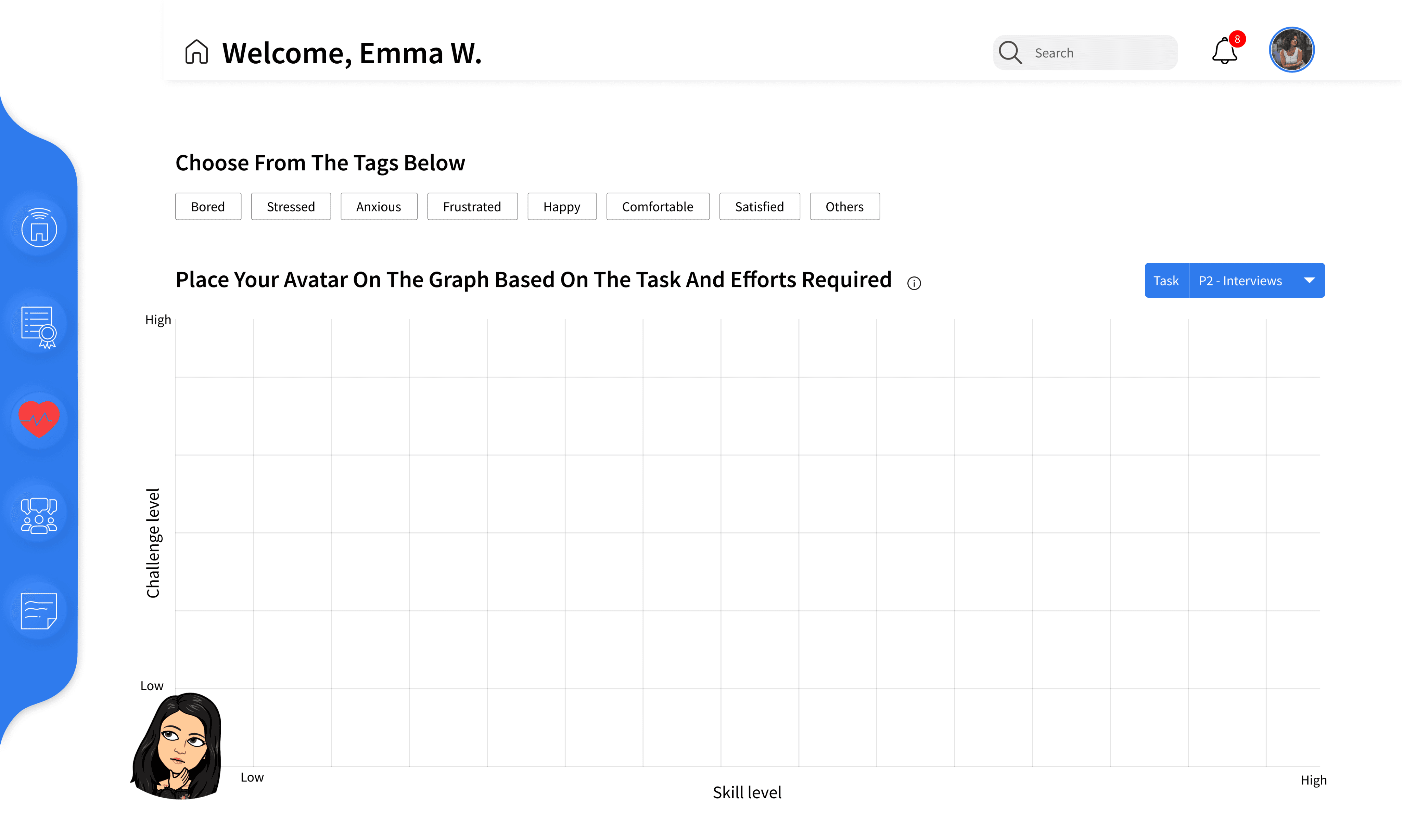

Given the importance of the topic, I spent a lot of time trying to find a solution which merged emotions and work.
.
Then I came across a theory- PARADOX OF WORK by Mihaly Csikszentmihalyi and BAILEY’S HUMAN PERFORMANCE; how one behaves at work based on two factors- time and challenge.
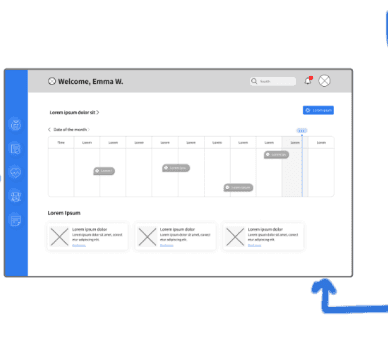
To keep the experience engaging, you have your own creative digital notepad to be used anywhere, anyhow, anytime.

In primary research insights, it was highlighted that employees use sticky notes or end of their diaries to jot down things.
Oh yes, the solution is similar to figjam, but it had exactly what was needed!!



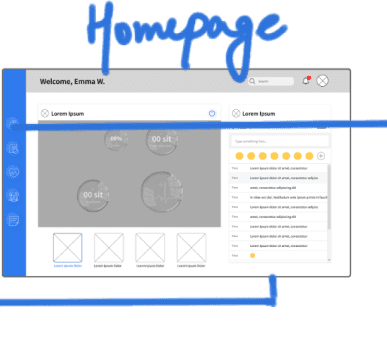


After forming a good idea of what one of many possible experiences and how the entire system would work, it was time to design.
Let’s develop the solution:
I studied all the factors affecting the problem with the help of cause and effect chart (fish bone).
Then I identified potential challenges for my spectrum of users in their journey. Reframing the challenges turned them into opportunities for design.
How might we
#1
Align office’s microclimate and the holistic environment.
Cause: A smart device would be used by more than 1 user.
Cause: Undesired situations can cause stress.
#2
Help employees relax whenever they require.
Cause: Users have fear of sharing and then being judged.
#3
Provide safe environment to have open communication.
#4
Make employees feel appreciated on their well being.
Cause: Users feel their efforts are not praised enough.
Defining the smart wearable concept

Light source
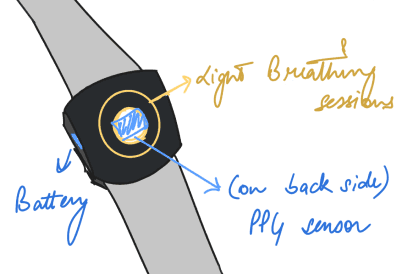
A bracelet as a smart wearable. Just like a statement accessory for employees. Utilizing PPG technology to monitor employee emotions through heartbeats, enhancing workplace well-being.
Aligning the microclimate of the space as per individual emotions, keeping in mind the holistic environment. And breathing sessions by aligning light and heartrate to relax the employee.
How will it help in emotional well-being of the employee?
Algorithm focus on the why behind the triggers. Figures out how to respond to it, if at all. Analyse the reaction and finally record the pattern for future possibilities.
How are recognized emotions managed?
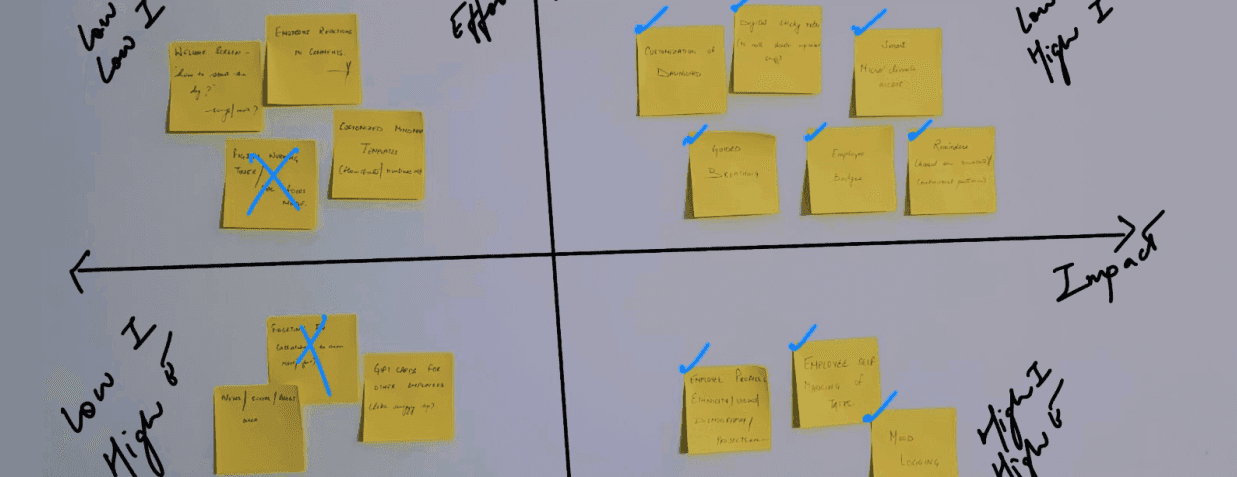
I came up with multiple ideas and then mapped all the potential features in a 2x2 matrix to downselect.
Micro climating
Breathing sessions
Anonymous chat
Personal notepad
Self assessed monthly badges
Exploring the form


Employees in an improved work environment
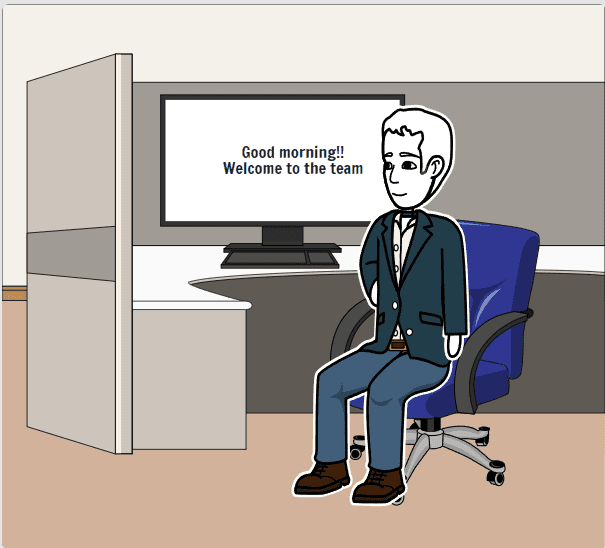
Relax at your table.

Have lunch together and socialize.

Checks to-do list of the project.
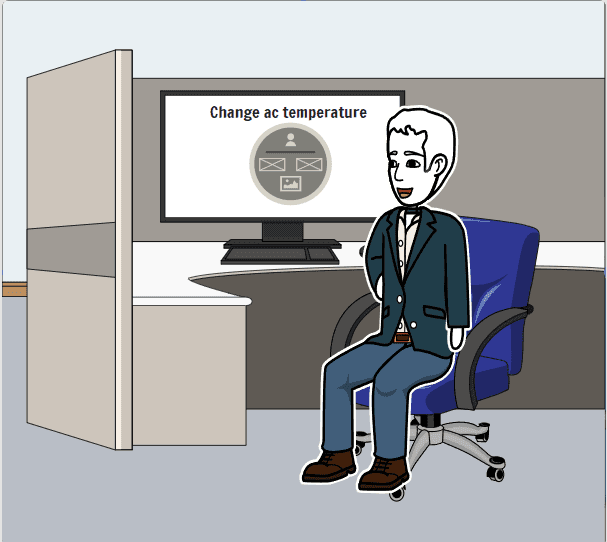
Adjusts ac temperature.

Collaborates with the team and work.

Attends the meeting and project is done.


Problem solving
Emotional design strategy was approached for positive user experience.
Let’s dive into the Research:
What, why and how emotions are triggered and can be managed in an office space to enhance productivity.

Chilling with friends
Relaxing
Instagram scrolling
Music
Food
LIKINGS
Punctual
Tech savvy
Creative
Friendly
PERSONALITY
Prior experience
Learning gap
Support Smart technology
Scale of company working in
ABOUT WORK
ABOUT
Diksha, a 24 years old employee joined a new design company in Mumbai. She is away from home. It was difficult adjusting at new office. Like understanding their work environment and meeting the deadlines.
NEEDS
To keep my calm and complete deadlines on time.
Company to consider our needs.
MOTIVATION
Good eateries in break time.
Appreciation for efforts.
Chit chatting with friends.
FRUSTRATIONS
Unfavourable working environment.
Miscommunication related to tasks to do.
Diksha Jain
24 years old
Bangalore, India
Yaar office mei koi kuch baat hi nahi karta, sb boss se darte hn.
User persona I

Managing employees’ mood can help personalization and overall betterment of the organisation. For eg. tracking their health, their preferences based on their past experience, demography, culture and habits.
Alongside managing negative ones, the key is to uplift positive emotions because they are more contagious.
Emotions at workplace

Ingredients of a favourable work environment
Insight #1
Informal engagement
Open communication in a formal office setting as it leads to positive bias. Helps user express and socialize.
Insight #2
Dealing with stress
Beyond an in-app experience as emotions need to be handled with empathy. Also, manage the trigger pattern.
Insight #3
Individual preference
The spatial experience should be personalized and flexible keeping in mind the holistic nature.
Insight #4
Grading and credits
Humans have a tendency to feel demotivated if someone low grades them. Whereas, appreciation is powerful.
Most organizations will require a mix of collaboration in addition to spaces that encourage informal social interactions.”
-Microsoft 2021 Work Trend Index
“
Working environment
Open communication nurtures a sense of belonging. Thus, creating a conducive atmosphere for shared goals and creativity.
Related factors
Individual’s mood, action performed, time constraints, level and intensity of workload affect prioritizing senses.
Space and senses
This link has equal parts of functionality and psychology. Space has a massive influence on one’s mood and behaviour.
Productivity in a space


Architypes
Ones with fear of sharing

Laveena Dangi
As an introvert,
I want to express without being outed
So that I socialize better.
Ones uncomfortable in office environment.

Leona Lobo
As an interior designer,
I want to have decent lighting
So that I can work properly.
Ones who stress work

Drashti Panchal
As an engineer,
I want to calm down during workload
So that I don’t panic all the time.
Existing smart technology
Strength
Session context
Remember information within a session and respond back in similar context.
Weakness
No logical reasoning
Lack the ability to understand incomplete information and experiences.
Opportunity
Empathetic response
Unable to interpret tone of voice or body language for empathetic responses.
tHREAT
Privacy concerns
Raises crucial privacy issues with data collection and cyber crimes.
Interviews
25+
Types
Open ended (In person), Pain point based, Value based
Platform
In person and Telephone
Interviews and surveys
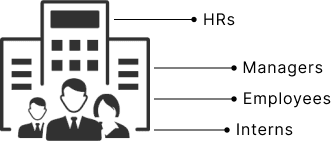
Background
I researched on human emotions and senses, and their relationship with the surrounding space. To start with a space, I chose office- as it has the highest demand for productive output.
Ensuring employees emotional well-being

Submitted at-

Overview
Focus
Research, User study, Problem solving, UI Prototyping (Figma)
Duration
4 weeks (110 hours)
Sector
Work environment, Human emotions, IoT
DEFINE
Problem space
Overview
RESEARCH
On-Desk research
User Interviews
Statistics
Insights
DESIGN
Design System
High Fidelity Prototype
IDEATE
How might we
Storyboarding
Prioritizing features



This is an innovative desktop app tailored for office efficiency and employees well-being. Utilizing smart wearable bracelets with PPG technology to monitor employee emotions, enhancing workplace well-being. Elevating the office experience with a holistic approach to employee success and satisfaction. Let's make the 9-to-5 epic together!
Problem
Unfavourable work environment adversely affects well-being of employees demanding different working conditions.
Challenge
A holistic solution to capture real time updates keeping in mind the freedom of employees. Enhancing communication in a formal setting.
Approach
Adjust surroundings based on preferences, self assessed monthly badges and anonymous group chat fostering a happy environment.
The unique brief helped me look outside of just the digital interface and look at the experience of working environment.
Learnings and Takeaways
#1 Be open to research and let ideas go
Academic requirement of a phygital solution was honestly a negative filter for me, initially. Engaging in an open discussion with my mentor- Sabyasachi Sir, allowed me to pivot from my initial ideas that reshaped the project's course.
#2 Discuss your projects with your fellow mates, especially when you feel stuck
I was unable to broaden the solution at a point. My conversation with my classmate- Jahanvi about some German University research regarding gamification gave me the idea of one of the main features of the application.
#3 Keep on revising user research (primary) insights on later stages of design process
I was randomly looking at my analysed interview transcripts when an unsaid behaviour of users clicked me. I was at information architecture, a way later stage but this also resulted to be one of the main features of the application.
Ensuring employees emotional well-being

Submitted at-
Focus
Research, User study, Problem solving, UI Prototyping (Figma)
Duration
4 weeks (110 hours)
Sector
Work environment, Human emotions, IoT
Overview
This is an innovative desktop app tailored for office efficiency and employees well-being. Utilizing smart wearable bracelets with PPG technology to monitor employee emotions, enhancing workplace well-being. Elevating the office experience with a holistic approach to employee success and satisfaction. Let's make the 9-to-5 epic together!
Background
I researched on human emotions and senses, and their relationship with the surrounding space. To start with a space, I chose office- as it has the highest demand for productive output.
DEFINE
Problem space
Overview
RESEARCH
On-Desk research
User Interviews
Statistics
Insights
DESIGN
Design System
Hi-Fi Prototype
IDEATE
How might we
Storyboarding
Prioritizing features


Problem
Unfavourable work environment adversely affects well-being of employees demanding different working conditions.
Challenge
A holistic solution to capture real time updates keeping in mind the freedom of employees. Enhancing communication in a formal setting.
Approach
Adjust surroundings based on preferences, self assessed monthly badges and anonymous group chat fostering a happy environment.
What, why and how emotions are triggered and can be managed in an office space to enhance productivity.
Let’s dive into the Research:
Managing employees’ mood can help personalization and overall betterment of the organisation. For eg. tracking their health, their preferences based on their past experience, demography, culture and habits.
Alongside managing negative ones, the key is to uplift positive emotions because they are more contagious.
Emotions at workplace

Space and senses
This link has equal parts of functionality and psychology. Space has a massive influence on one’s mood and behaviour.
Working environment
Open communication nurtures a sense of belonging. Thus, creating conducive atmosphere for shared goals and creativity.
Related factors
Individual’s mood, action performed, time constraints and intensity of workload affect prioritizing senses.
Productivity in a space
Most organizations will require a mix of collaboration in addition to spaces that encourage informal social interactions.”
-Microsoft 2021 Work Trend Index
“
Interviews
25+
Types
Open ended (In person), Pain point based, Value based
Platform
In person and Telephone
Interviews and surveys
Favourable work environment
Insight #1
Informal engagement
Open communication in a formal office setting as it leads to positive bias. Helps user express and socialize.
Insight #2
Dealing with stress
Beyond an in-app experience as emotions need to be handled with empathy. Also, manage the trigger pattern.
Insight #3
Individual preference
The spatial experience should be personalized and flexible keeping in mind the holistic nature.
Insight #4
Grading and credits
Humans have a tendency to feel demotivated if someone low grades them. Whereas, appreciation is powerful.
ABOUT
Diksha, a 24 years old employee joined a new design company in Mumbai. She is away from home. It was difficult adjusting at new office. Like understanding their work environment and meeting the deadlines.
NEEDS
To keep my calm and complete deadlines on time.
Company to consider our needs.
MOTIVATION
Good eateries in break time.
Appreciation for efforts.
Chit chatting with friends.
FRUSTRATIONS
Unfavourable working environment.
Miscommunication related to tasks to do.
Diksha Jain
24 years old
Bangalore, India
Yaar office mei koi kuch baat hi nahi karta, sb boss se darte hn.
User persona I
Architypes
Ones with fear of sharing
Laveena Dangi
As an introvert,
I want to express without being outed
So that I socialize better.
Ones who stress work
Drashti Panchal
As an engineer,
I want to calm down during workload
So that I don’t panic all the time.
Ones uncomfortable in office environment.

Leona Lobo
As an interior designer,
I want to have decent lighting
So that I can work properly.
Problem solving
Emotional design strategy for positive user experience.
I studied all the factors affecting the problem with the help of cause and effect chart (fish bone).
Then I identified potential challenges for my spectrum of users in their journey. Reframing the challenges turned them into opportunities for design.
How might we
#1
Align office microclimate and the holistic environment.
Cause: Single smart device used by more than 1 user.
Cause: Undesired situations can cause stress.
#2
Help employees relax whenever they require.
Cause: Users fear of sharing and then being judged.
#3
Provide safe environment to have open communication.
#4
Make employees feel appreciated on their well being.
Cause: Users feel their efforts are not praised enough.
Micro climating
Breathing sessions
Anonymous chat
Self assessed monthly badges
Personal notepad
I came up with multiple ideas and then mapped all the potential features in a 2x2 matrix to downselect.


Exploring the form
Defining smart wearable concept
A bracelet as a smart wearable. Just like a statement accessory for employees. Utilizing PPG technology to monitor employee emotions through heartbeats, enhancing workplace well-being.
Algorithm focus on the why behind the triggers. Figures out how to respond to it, if at all. Analyse the reaction and finally record the pattern for future possibilities.
How are recognized emotions managed?
Aligning the microclimate of the space as per individual emotions, keeping in mind the holistic environment. And breathing sessions by aligning light and heartrate to relax the employee.
How will it help in emotional well-being of the employee?

Light source


After forming a good idea of what one of many possible experiences and how the entire system would work, it was time to design.
Let’s develop the solution:
Information Architecture
I then mapped out the complex pathways of a user navigating the app for different end goals. This essentially came down to a few user flows — Microclimate needs, opting for breathing sessions etc.

Features to benefit from
To provide you with microclimate based on your preferences, application needs to know you better. Thus on joining, you need to fill it under your employee profile.
Keeping in mind the holistic nature, a request needs to be sent and approved to switch the device off.
To manage your emotions, application detects them keeping in mind your privacy. Through emotions based task or smart bracelet’s PPG technology.
Once it is done, you may seek breathing sessions or other resources.
To appreciate your efforts, app allows you to self assess your performance and associated emotions. On completion of the task, monthly well-being badge is awarded, without impacting team reports.
Also the feedback of assessment is positively personalised based on your ethnicity.
To eliminate the fear of sharing and promote open communication in a formal setting, application has an anonymous chat section.
To eliminate the fear of sharing and promote open communication in a formal setting, application has an anonymous chat section.
Given the importance of the topic, I spent a lot of time trying to find a solution which merged emotions and work.
.
Then I came across a theory- PARADOX OF WORK by Mihaly Csikszentmihalyi and BAILEY’S HUMAN PERFORMANCE; how one behaves at work based on two factors- time and challenge.
Usko farak hi nahi padta that I wasn’t well.
Dude my mentor said my work isn’t upto the mark.
vs
Is baar vaat lga dunga, dekhna
I feel I didn’t give my 100% to this project due to my health.
Reference to a research paper by Affective & Cognitive Institute, Offenburg University
.
Self realization inspires to improve, more than grades by mentor.
Feedback in mother tongue fosters sense of community, thus empathetic response.
In primary research insights, it was highlighted that employees use sticky notes or end of their diaries to jot down things.
Oh yes, the solution is similar to figjam, but it had exactly what was needed!!
Different versions of a conversation between employees-

The unique brief helped me look outside of just the digital interface and look at the experience of working environment.`
Learnings and Takeaways
#1 Be open to research and let ideas go
Academic requirement of a phygital solution was honestly a negative filter for me, initially. Engaging in an open discussion with my mentor- Sabyasachi Sir, allowed me to pivot from my initial ideas that reshaped the project's course.
#2 Discuss your projects with your fellow mates, especially when you feel stuck
I was unable to broaden the solution at a point. My conversation with my classmate- Jahanvi about some German University research regarding gamification gave me the idea of one of the main features of the application.
#3 Keep on revising user research (primary) insights on later stages of design process
I was randomly looking at my analysed interview transcripts when an unsaid behaviour of users clicked me. I was at information architecture, a way later stage but this also resulted to be one of the main features of the application.

See first project